Sand In My Sandals Has Grown Up!

As I begin to prepare for a new adventure at the end of this year I have finally decided to give my blog a breath of life! Thanks all for the support and I’d love to keep in touch with you at my new and improved home: www.sandinmysandals.com.au.

See you there! Happy travels friends 🙂

Sam

Three Days in San Pedro La Laguna

It’s believed by many that Guatemala’s Lago De Atitlan is one of the most beautiful lakes in the world. With impossibly sky blue water and surrounded by three looming volcanos, acting as watchmen over the lake as if guarding a prized jewel, this truly is one of the most stunning backdrops a traveller could ask for.

San Pedro La Laguna

San Pedro La Laguna

Sitting proudly on the shores of Lago De Atitlan is the lakes’ darling town of San Pedro La Laguna. Fitting somewhere in between the chaos and noise of Panajachel and the hippy meditation village of San Marcos, San Pedro is a lively little option for those seeking some fun and adventure with a sprinkle of cultural delight.

San Pedro has been rewarded with the reputation of one of Central America’s most popular backpacking destinations, and rightfully so. The town is far less touristy than Panajachel (the original Lago De Atitlan party town) and it is this fact that has brought crowds of international backpackers swarming. Souvenir stands are replaced with fresh fruit stores, thumping electro music is replaced with the soft strumming of acoustic guitars, and Spanish schools seem to be the order of the day.

However, despite the town’s maintenance of traditional ways it would be foolish to expect a unique cultural experience. Due to the sudden influx of tourism to this small town the tourism industry is well and truly flourishing. Every bus load of tourists seems to bring a new hostel catering for both the rich and the ragged. The town is in full swing, though is thankfully all the more wonderful for it.
But how should you spend your three days here?

Here we go.

Day 1:

Morning-On day one you may just want to take a morning stroll down the pleasant lakeside esplanade. You don’t want to make this too strenuous as you will be stretching those legs out this afternoon. However, with a relaxing walk through town you will be able to interact with the friendly locals, stop off at any of the numerous deliciously fresh fruit stalls and organise your trek for this afternoon (as well as the following day’s activities). On the way back ensure that you stop off and try the mouth-watering street food on 7th avenue, near the Pana Dock. For a mere 8Q you will be able to fill yourself with a generous helping of chicken and sausage with beans, complimented with fresh guacamole and a tortilla.

Volcano Climbing

Volcano Climbing

Afternoon-After a relaxing morning it is now time to get those legs moving with one of San Pedro’s famous hikes. If you missed out on the fantastic volcano climb in Antigua you may like to try scaling the equally impressive Volcano San Pedo. This is a fantastic hike which will have your blood pumping and your adrenaline rushing.However, as a reward for your hard work you will be rewarded with one of the best views in Guatemala. Before starting this climb ensure that you have organised a guide with a local tour outfit or you may run into some problems on the way (whether it be from daring locals or accidently falling head first off a volcano).

Evening-After a big day it is time to unwind. Before finding a restaurant to feed your now grumbling stomach (I recommend Humus-ya for the best Humus and Falafel in Central America) you could visit the unique thermal spas situated on the edge of the lake. For approximately AUS$2-3 you can take some time for yourself to relax in a selection of volcano-fed pools. Flickering candles will silhouette your view of the magnificent lake which is but a stones throw away, and you will realise that there is no other place quite like San Pedro La Laguna.

Caitlin relaxing in the lake side thermal spa

Caitlin relaxing in the lake side thermal spa


Day 2:

Morning-On day two it’s time to hit the water in a rented kayak or canoe from one of the numerous tour operators near the dock. Mornings in San Pedro bring with them pleasant temperatures and little wind, resulting in a calm expanse of blue turquoise ready to be enjoyed. However, ensure that if hiring a kayak or canoe you rise early because once lunch time hits the wind picks up and the lake can become quite unmanageable.

Kayaks in Lake Atitlan

Kayaks in Lake Atitlan

Afternoon-After a bit of fun in the sun it is time to return to San Pedro before the wind starts to make paddling tricky (note: if you get caught too far from San Pedro I suggest paddling to the closest town, and from there you can hop on a ferry back to San Pedro).

After you have filled your stomach at a selection of San Pedro’s lakeside restaurants it’s time to loosen those muscles and experience the soothing power of the lake with a dose of yoga. Situated just under The Buddha Bar in the hip ‘Otro Lado’ (a mere 5 minute walk from the dock), you will receive one and a half hours of lakeside yoga for under AUS$5. If this doesn’t limber you up nothing will.

Day 3:

Morning-Before grudgingly finding your way to your onward transportation you can choose between the early risers climb up Indian Nose or Zip-lining through the hills. Both are worthy inclusions to your time in Lago De Atitlan, and will depend largely on your departure time.

atitlan 9

The glorious hike up Indian Nose is best done early in the morning (4:30am), which will allow you time to reach the top for a spectacular sunrise. This hike is strenuous, though no more than any of the previously mentioned Guatemalan hikes. The most painful part of this trip is waking up, though after reaching the top and seeing the sun rise over the expansive lake you will soon forget about those tired eyes.

Atitlan zip-lining

Atitlan zip-lining

Alternatively, if your transportation is later in the day you may have time to try the 400m zip-line which will shoot you between two mountains and offers yet another great view over Lake Atitlan. If you are lucky with your timing you may even have the chance to witness the local Catholic/Mayans performing a service at the Mayan alter. For a mere Q150 this is certainly an experience worth careful consideration.

Could’ve, Should’ve, Would’ve…

If you have the time these activities also come highly recommend. Unfortunately time was not on my side and sacrifices were to be made. However, I hope to return to Lago De Atitlan soon and satisfy my burning desire to finish what I started.

•Paragliding over Lake Atitlan (this was not a time issue. Make sure you are in the area when there is enough wind to make it possible, otherwise you will be out of luck.)
•Horseback Riding
•Scuba Diving
•Exploring the surrounding towns and villages.

A Lesson In Religion

caves 7

I could feel my heart thumping in my chest. Beads of sweat began trickling down my face like I’d just run a marathon. But I wasn’t running at all. I was standing still, using all my energy to remember where I had come from, to remain calm and concentrate. Through the eerie silence I could hear the soft sizzling of my candle, a slowly burning wick threatening to thrust my companions and I into a world of suffocating darkness. We push through a seemingly never ending river of mud, climb over a succession of jagged rocks and try to distinguish one column from the next. We question whether this was the same formation we passed an hour ago and come up with the same anti climatic conclusion: it all looks the same.

Exploring The Laquin CavesInitially the plan was simple. We would explore Guatemala’s Lanquin Caves armed with nothing more than a burning candle and a healthy sense of adventure. We had read that these caves were home to thousands of different species of bat and when the sun sets a flurry of wings will come out to play, exploding from the caves entrance in a wave of brown and black. This was something we had been longing to see, but what’s a memory without a little adventure, right?

Coming from a country such as Australia where rules, laws and restrictions are over-enthusiastically enforced the sheer simplicity of this ‘tourist attraction’ caught me by surprise. There was no external lighting, no guide (apparently you can hire one, which in hindsight may not have been a bad idea), no map and no way of knowing if our healthy sense of adventure had led us into hell-quite literally.

The Lanquin Caves were, and still are, accessed by Mayan Indians who believe whole-heartedly in the role of the caves in linking our world to the underworld. Essentially, the caves act as a bridge between the two realms and many believe that to venture too far into this system would expose not only a maze of unexplored and unnavigable tunnels, but hell on earth. We were lost. Hopelessly, inexplicably, terrifyingly lost in hell. Why hadn’t I thought to put this on my bucket list? Meet Hades, tick. Daylight ceased to exist and I instantly felt as if I was one of those unfortunate characters in The Descent (if you haven’t seen this film do yourself a favour: never watch it if caving is on the agenda).

caves 1Yes, I was lost in an unexplored cave system with Caitlin, a member of the Guatemalan Peace Core and a man who bore a striking resemblance to Jesus-in fact that’s what we called him. Coincidence? I think not. For many Guatemalans these caves are literally the ‘heart of heaven’, and I was being led by a man known only as Jesus-I struggled to make sense of the irony in this. Take from this what you will, but to be exposed to a strong cultural belief in such a real way was truly confronting.

For two hours we fought with the darkness, fought with each other and fought with our minds. When faced with the terrifying realisation that no one knows where you are-that you yourself don’t know where you are-it is frighteningly easy to begin recollecting past Bear Grylls episodes and asking: what would Bear do in this situation? Unfortunately my mind insisted on wandering back to The Descent, and I couldn’t help but wonder whether I would soon turn into a cave dwelling evolutionary marvel who would begin growing gills, learn to hunt by scent and get kicks out of scaring the pants off lost cavers. My mind was a mess, and as the wax on my candle slowly burnt out so did my spirit.

Hello new home, you’re a little darker than I’m used to but at least I won’t have to wash the dishes.

caves 4As we forged through the caves, leaving a sizzling trail of melted wax in our wake, a sense of familiarity began to welcome us. Fresh boot prints had been imprinted into the muddy ground, a candle we had sacrificed on the way still burnt on the mossy rock we had left it on (at least we did something right) and up ahead was a railing which led to the caves entrance; a railing that we foolishly left behind what seemed like an eternity ago. Soon after some much needed cheers and pats on the back we had once again welcomed the light. My gills began to shrink, my sense of smell went back to normalcy and I no longer wanted to scare the pants of cavers.

Not today Hades, not today.

We jubilantly exited the cave, rejoicing in our new found freedom which we had once taken for granted. Though despite the mud that covered us from head to toe, the melted wax that left a painful and indelible reminder on our palms and the bat poo caught in our hair we had come here for a reason, and by god we would see this through (or should I say by Jesus?). We sat at the entrance of the caves and waited for sundown. We waited for the bats that we had become so well acquainted with over the past few hours. We joked, we laughed, we recollected and we soon forgot about the darkness we had just escaped. Despite the fear I had felt in my bones I knew that this experience would be one of those defining moments in my life-the type of moment that highlights the reason for travelling in the first place.

Bats fly free from Lanquin's Bat Cave

Bats fly free from Lanquin’s Bat Cave

Suddenly the caves began to echo with a deafening screeching which could only be described as thousands of nails on a jumbo chalk board. We held our ears, smiling from ear to ear and waiting patiently for the explosion we had longed to see. The screeching suddenly stopped, and was replaced with the distant sound of flapping-a sound that was quickly upon us. Suddenly a wave of bats whooshed past our heads in a flurry of excitement, covering the sky in a blanket of brown and black (as promised). We sat in the eye of a storm of wings which dodged and weaved past our exposed faces and made a bee line for freedom. I couldn’t help but compare the excitement of these creatures, who call these caves home, with our very own joy when leaping out of the same exit. Their elation was contagious.

After fifteen minutes of dodging flocks of giddy bats the skies began to clear and give way to a bright, full moon. I sat where I was in silence, recollecting the events that had unfolded in a mere four hours. Never in my life had I experienced the range of emotions that I had undergone in this relatively short period of time: fear, exuberance, impatience, giddiness, acceptance and courageousness to name a few. However, I knew that as a traveller these were the moments that I lived for and I will forever cherish each and every one of these feelings. I hadn’t met Hades, but I had been to hell and back with a man named Jesus. And that is a memory that will last forever.

Bat Cave Entrance

Gibbon a Helping Hand

When thinking of Phuket the words ‘party’ and ‘tourist’ automatically come to mind, and rightly so. However, just 20 minutes outside of Phuket Town’s hustle and bustle lies the serene Gibbon Rehabilitation Centre. Stepping into the Rehabilitation Centre is like discovering a new world-a world where the trees buzz with siren-like howls and the branches shake and convulse as if with a mind of their own. Initially this may be confronting, but on closer inspection you will realise that these are howls of joy and belonging, and that you are not just being welcomed into a tourist attraction, but into a home.

Phuket’s Gibbon Rehabilitation Centre provides refuge to over sixty Gibbons at a time, most of whom have been abused from a young age and used as tourist attractions. In Thailand there are over 3,000 gibbons killed each year, as families are slaughtered trying to protect their young from hunters.

The biologists and volunteers who work here adopt these cheeky, acrobatic white-handed gibbons, and teach them the ABC’s of living in the wild. Unfortunately, upon release many of these lovable animals are once again caught or killed by hunters and may end up finding refuge in the rehabilitation centre once more.

Lulu finds refuge in Phuket’s Gibbon Rehabilitation Centre after her family was killed by hunters.

The Rehabilitation Centre aims to save as many Gibbons as they can, though statistics tell us that for every saved Gibbon there are two or three who have been killed. However, it is obvious that the members of this particular family care little for statistics. They swing in their large cages and sing to each other as if for the moment this is where they belong, hoping that one day they might just make it to freedom.

 Tip for the penny pinchers:

One of the great benefits of this project is that it is solely run by volunteers from across the globe and no entrance fee is charged. Therefore, the centre has positioned itself as an intriguing activity for not only those interested in Gibbon preservation, but also those who are looking for an enjoyable day with a restricted budget. It is also recommended to visit the Bang Pae Falls, which are located a short 10 minute walk from the Rehabilitation Centre.

Tourists and locals converge to cool off in the Bang Pae Waterfall

So, You Think You Can Cook?

Culturally, Chiang Mai offers much more than your usual tourist hotspots. With a huge variety of attractions and sites the city is guaranteed to please even the savviest of travellers. However, to fully understand the culture of this magical city you must immerse yourself in the Thai cuisine, and what better way to do this than by learning how to cook some special dishes for your friends and family back home.

Throughout the Western world it seems that Thai food is becoming extremely popular with an increasing number of restaurants opening their doors to a mass of expectant customers. These days (due to an increasingly competitive environment) food quality and presentation must be of the highest standards in order to survive. Because of this demand Chiang Mai now offer a number of cooking classes designed to teach customers not only how to cook traditional Thai dishes, but also how to choose the freshest ingredients.

Student cooked yellow curry in the Baan Thai kitchen

The recommended cooking class to take when visiting Chiang Mai is the Baan Thai home cooking class, which is situated on Rachadamnern Road and boasts a wholly traditional setting ensuring a memorable cultural experience. The cooking classes are very reasonably priced at around 900 baht (around $28) per person for the entire day (about 10:00 until 4:00), and this includes not only the cooking of 7 dishes but also a guided tour of the local food markets where you will buy your ingredients for the day.

Note: the price of these ingredients is included in your initial fee, though you will have to pay for any personal food purchases while in the markets.

The cooking begins at Baan Thai

The markets are a fantastic cultural opportunity which allow you to experience traditional Thai life, while enjoying a variety of spectacularly fresh produce. Within the market you will visit a number of small stalls selling fresh food at a cheap price; from vegetables and fruit to an impressive variety of nuts, rice and poultry. You will also be encouraged to let your guide, or any of the friendly shop owners, answer any questions you might have regarding Thai cooking. Once the shopping has been completed your guide will escort you back to the school where your first cooking challenge awaits.

Baan Thai cooking instructor, Salam Mahayat, chooses the freshest ingredients from local markets

Chiang Mai: The Rose of The North

Each February Chiang Mai hosts one of the most spectacular parades in Thailand-The Flower Festival. Keeping true to its title ‘Rose of the North’, The Flower Festival gives Chiang Mai the chance to truly swing into full bloom with an extravagant offering of intricate flower sculptures of animals, temples and scenes from traditional Thai stories, as well as food markets, local handicrafts and a sensational beauty pageant. Here, Thai culture is brought to the forefront and explodes in a traditional celebration of magnificent proportions.

The Flower Festival is held each February as this is when the Thai climate is at its coolest, and also because during this month more than 3000 species of orchid-whether the calming purplish orchirds or the enticing red roses-come to bloom and reveal their dazzling beauty. It is a parade that attracts not only locals but also crowds of visitors from around the world, witnessing the old city come alive with colourful displays of floral delight.

Streets come alive at Chiang Mai Flower Festival

Streets come alive at Chiang Mai Flower Festival

The parade takes place for the majority of the day and slowly winds through the streets of Chiang Mai, altering the normally rushed pace of the city to a state of calmness. If you find that you need a break from the constant floats and dazzling colours, salvation can be found in one of the many streets surrounding the parade. These streets play host to an array of small shopfronts from fresh Thai cuisine, handicrafts, fruit markets and clothing.

For those adventurous spirits who are bored of the traditional Thai food, fear not, as you have the opportunity to try some unique Thai delicacies that will be difficult to find on a restaurant menu. From deep-fried cockroaches, spiders and worms to steamed piranha your tastebuds will be treated to a range of foreign tastes and flavours.

The alternate flavours of Chiang Mai

The alternate flavours of Chiang Mai

A cabaret a day keeps the cultural ignorance away…

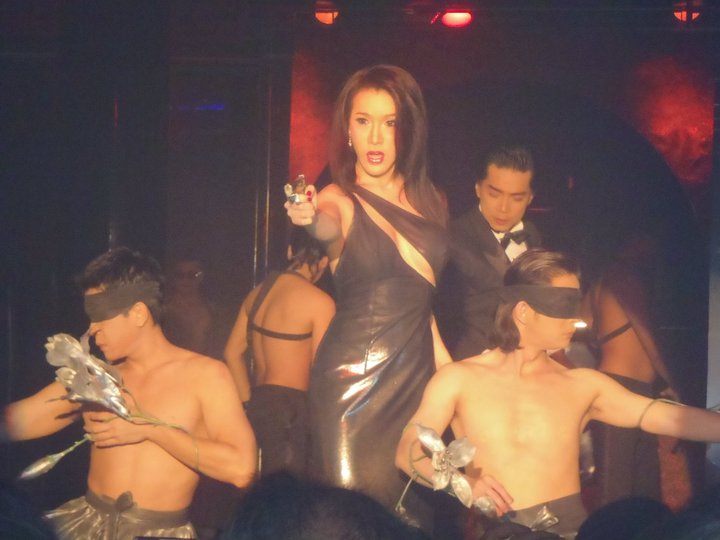
In our conservative Western culture ladyboys (known in Thailand as katoeys) are often viewed with a somewhat curious nature, however in Thailand they are mostly accepted and embraced by a highly tolerant society. Because of this foreign curiosity lady-boys have gained an element of prestige in the Thai entertainment business, with shows and cabarets proving to be one of the most successful tourist attractions offered. However it is not just the bright lights and dazzling costumes-or the obvious curiosity of seeing a real-life gender switch-but the unique cultural immersion that comes from witnessing a show like this. Lady-boys are a unique and accepted part of day to day life for the Thai people and, in my opinion, witnessing a show such as this is an important part of understanding the Thai culture.

Calypso Cabaret

When it comes to lady-boy shows Bangkok has a buffet of options; from the cheap and often quite confronting street shows, to the upper class spectacles of dazzling costumes, music and choreography. It is generally recommended by Bangkok locals to steer well clear of those lower class street shows, which often attract unpleasant crowds and can result in theft (or merely a waste of your money). However, by doing some easy research you can ensure that you will be rewarded with a value for money show and an enriching cultural experience.

One of the most renowned cabaret’s in Bangkok is the world famous Calypso Cabaret. There are two shows held each night at the spectacular Asia Hotel (a fitting venue for such an extravagant production).  The shows run for approximately 90 minutes each and audiences can expect dazzling lights, breathless set designs, glamorous costumes, an ensemble of seamless gender-straddling performers and, most importantly, a guaranteed bang for your buck. Audiences are also given the chance to meet the performers at the end of each production, providing a great photo opportunity to show friends and family.

Lady Boy at Calypso (believe it or not)

Tips for the penny pinchers:

When it comes to lady-boy shows it is important to note that saving money may not necessarily be the best option. Granted, the Calypso is one of the more expensive shows in Bangkok and there are cheaper options out there. However these cheap imitations will often be a waste of your money, and we recommend doing your research before agreeing to one of the many lady boys hustling the streets for business. It is also highly recommended to book your tickets before arriving at the venue (depending on which show you are attending) as the prices may differ quite substantially.

Shop ‘Til You Drop at the Chatuchak Weekend Markets

So, you think you’re a shopping pro? If bargain hunting is your thing then look no further than Bangkok’s world famous Chatuchak Weekend Markets. Here you will find the term ‘shop ‘til you drop’ to be taken quite literally. The Chatuchak Weekend Markets are an expansive 35-acre area which houses over 8,000 unique shopping stalls and, on a typical weekend, attracts over 200,000 visitors. Any local will tell you that this is the mecca for Thai bargain hunting and that there is only one negative to these brilliant markets-you will most definitely be buying another suitcase.

What’s on offer?

These markets are considered unique not just because of sheer size but because of the variety of products that are on offer. In one section you will find a range of clothing from handmade knitted products, handbags, singlets, shirts, hats, Levi jeans, shoes and shorts. In another you will be greeted by the aromas of home cooked Thai Cuisine and sweets, or perhaps a fresh fruit shake to quench your thirst. You also have the opportunity to delve into the more exotic side of Bangkok, with a large selection of unique animals on display. Ever wanted to own a Monkey or a Python?

Boy busking at markets

How to find what you’re looking for

At first, conquering the Chatuchak Markets will be daunting to even the more savvy shoppers. But thankfully there is a method to the madness. Once you have made your way into the markets you will find yourself on the main walkway which surrounds the entire market. This walkway then branches off into a series of alleyways which are grouped into sections. There are 27 sections in all, and it will require some navigational skills to remember where you have already visited. But fear not, with the help of this brief guide and the friendly market volunteers you will find exactly what you’re looking for.

Market Directory (sections guide originally published by Chatuchak.org. http://www.chatuchak.org/)

  • Clothing & Accessories (sections 2-6, 10-26)
  • Handicrafts (sections 8-11)
  • Ceramics (sections 11, 13, 15, 17, 19, 25)
  • Furniture and Home Decoration (sections 1,3,4,7,8)
  • Food and Beverage (sections 2, 3, 4, 23, 24, 26, 27)
  • Plants and Gardening tools (sections 3, 4)
  • Art and Gallery (section 7)
  • Pets and Pet Accessories (sections 8, 9, 11, 13)
  • Books (sections 1, 27)
  • Antiques and Collectibles (sections 1, 26)
  • Miscellaneous and Used Clothing (sections 2, 3, 4, 5, 6, 22, 25, 26)

The weekend markets are open on Saturdays and Sundays, 09:00 – 18:00, and Fridays 18:00 – 24:00.

Tips for the penny pinchers:

Getting to the Chatuchak Weekend Markets can be a stressful exercise, though there are a number of different options available that can make this a relaxing and affordable experience.

SkyTrain

Bangkok’s SkyTrain is one of the easiest and most affordable ways to see Bangkok and has become a great alternative to the congested Bangkok traffic. There are SkyTrain stations spread throughout Bangkok (most likely within a walking distance from your hotel) and once aboard you will be taking a short trip to Mo Chit station. Upon arrival you will join the crowd of eager shoppers for a short 10 minute walk to the markets.

TukTuk

For the more adventurous travellers, it can be quite beneficial to hail a TukTuk (Thailand’s answer to a Western taxi), which will drop you at the front gate of the markets. TukTuk’s can prove quite cheap depending on how skilled you are at bargaining, though be warned that this is not the safest of travelling options. While there are few TukTuk related accidents, the bustling roads of Bangkok can prove quite daunting for some travellers. However, this can be an exciting way to see the streets of Bangkok and for a small tip can prove a convenient ride home. After a day at the markets you and your feet will be searching for all the convenience you can find.

Riding in a Tuk Tuk

Introducing Bangkok: The ‘City of Angels’


bangkok

When first arriving in Thailand’s industrious capital, Bangkok, one cannot help but be confronted by the hustle and bustle of this frantic urban sprawl. Bangkok (known in Thai as Krung Thep Maha Nakhon), meaning “city of angels”, has grown considerably over the years and is now Thailand’s commercial, creative, economic and consumer centre.

Demographics collide in this concrete jungle as Bangkok attracts a range of people from rural villagers looking to start a new life, hip teenagers with a pocket full of cash, high society types and tourists taking full advantage of the pulsing night life and cheap lifestyle. “City of angels” is adhered to wholeheartedly by the people of Bangkok, and it is rare not to be greeted with a welcoming smile. For travellers Bangkok provides not only an exciting night life, delicious food, a continuous flow of alcohol and cheap shopping but also a unique cultural experience created by the city’s “angels” themselves.

Streets of Bangkok

For those interested in embracing the history of Bangkok, Old Bangkok, situated alongside Ko Ratanakosin, is the original royal district filled with historic monuments. If you follow the river North you will find the charming Banglamphu, a residential neighbourhood of friendly shophouses offering cheap Thai delicacies and crafts. If your historic taste buds are yet to be satisfied Dusit, straddling the banks of Banglamphu, is home to the Vimanmek Teak Mansion and the spectacular royal residence, Chitlada Palace.

If you follow the river South you can experience an entirely different riverside view of Bangkok, picturesque with crumbling buildings, grand churches and water-side residences. Nestled along the Riverside is the bustling Chinatown, which offers an array of exciting shopping options that will challenge your tastebuds and give a whole new meaning to impulse buying.

China Town view from ferry

Modern Bangkok is based around Silom, Sukhumvit and Siam Square and provides homesick tourists with all the comforts of their respective country. Shop-a-holics will celebrate in Siam Square’s vast shopping centres surrounding The Phra Ram, while foreigners craving their favourite home-cooked dish will find refuge at Th Sukhumvit, offering a range of restaurants specialising in international dishes and cuisine.

Bangkok comes alive at night

New Years Eve With a Bang!

La Paz 2

As a teenager New Year’s Eve was the chocolate bar I would look forward to as a young child. And, like a chocolate bar, I would build it up for weeks only to be left with a sense of un-fulfilment and a need for more. The clock would hit midnight, my inebriated friends and I would slur a cryptic countdown that only we could understand and I would then mentally tick off my yearly accomplishments. Again, these would often fall short of what I had planned exactly 12 months ago. I would list my short-comings off in my head, on by one:

Why hadn’t I kissed that girl?

Why hadn’t I come first in English (or advanced past the bottom ten people in Maths?)

Why had I still not broken the three hundred CD’s mark for my collection?

And why wasn’t I the most popular guy in school, no, the suburb?!

The more I thought of it the more baffled I became. But no matter, a new year has just arrived; a new chance to start a completely new wish list.

Ultimately, after innumerable disappointing New Year reflections these promises to myself came to a grinding halt. The parties and cryptic count downs continued, but no longer would I make promises that I was unable to keep. I would save myself the disappointment. However, 2012 was the year that I broke this cardinal rule and I made a single promise to myself: see the world. And when the clock struck twelve in La Paz, Bolivia, bringing with it the year 2013, it felt like I had finally found that perfect chocolate bar.

La Paz 1La Paz, Bolivia’s infamous governmental capital city is truly a sight to be seen. With the city’s building’s literally clinging to the sides of a spectacular canyon and filling the deep bowl below, La Paz’s reputation as one of the world’s most breathtaking city’s (literally) is well deserved. Sitting at 3660m above sea level La Paz will hit you like a punch in the face.

When first entering the city I couldn’t help but question how this rat race could possibly earn the name La Paz (meaning Peace). From chaotic street scenes and howling street stall owners- playing what I can only assume is a local game of ‘who can shout the loudest’-to a myriad of sharp cracks as small fireworks are let off in the middle of the street. La Paz is bedlam, but is all the more wonderful for it and would be the setting that I would welcome in the year 2013.

As I walk the bustling streets it becomes clear just how important New Year’s Eve is to the city’s people. Perhaps they have wish lists too? Or maybe they’re just excited that they have survived the Inka’s predicted ‘end of the world’? The streets come alive with small stalls selling a collection of yellow merchandise ranging from hats, bow ties, full suits and even lingerie for the more daring Bolivian. I later learn that yellow is the traditional colour for a Bolivian New Year and with such a vibrant backdrop a sour face was near impossible to find.

Now, one thing must be noted about a Bolivian New Year. Despite the chaos that ensues and the excitement that electrifies during the day, the evening is largely a family affair which, strangely enough, means that the streets are stunningly quiet. For an Australian this is quite strange as by seven or eight o’clock pm we are well and truly pissed, and it is time to begin terrorizing the town. While relatively tame during the day, the streets of Sydney become a scene of hedonistic excitement by night. Thus, it was a shock to find the daylight bedlam of La Paz replaced with a scene of unprecedented calm, inhabited only by taxi drivers and a few cunning shop owners looking to make a quick buck before the clock struck twelve.

La Paz 3No matter. Despite a distinct lack of local charm on the streets below our rooftop party pounded on through the night. With a Bolivian DJ belting out some funky, albeit unusual tunes us gringos sang and danced our way to midnight with some extra help from a few simple party aids. Plastic maracas, fluro whistles, novelty guitars and an array of sparkling outfits converge in a swell of excited anticipation.

A bonfire is started on the rooftop terrace, bellowing waves of much needed heat and torrents of smoke, rising into the cloudless evening sky. Glowing scarlet red and creating an unusual silhouette in the heart of the flames is a llama fetus, a unique addition to any New Year’s bonfire, though a stark reminder of how rich the Bolivian culture is and how unforgettable this night will be. We excitedly reveal our assortment of fireworks which we bought from a street stall outside our hotel. In Sydney it’s illegal to buy fireworks, so we were overly eager to make our mark on the Bolivian skyline. We shot them off one by one as we counted down to one of the most awe inspiring sights most of us will ever witness.

5…We dance elatedly around the fire, cheering like we are in some sort of ‘Lord of the Flies’ re-enactment.

4…The Llama fetus glows menacingly in the centre of the flames.

3…A local man begins to howl at the night sky, chanting a traditional prayer while in some kind of trance.

2…Champagne is sprayed across the crowd of ecstatic locals and foreigners as unique cultures converge and celebrate as one.

1…Then it happens.

La Paz 6

The sky lights up as thousands of fireworks are let loose into the night sky. The ground begins to swell as countless explosions of colour and sound fill the deep bowl, the bangs and cracks echoing through the gullies as if in a war zone. From the centre of the bowl it is as if the Inkan predictions were merely a couple of weeks too late, and that the world really is coming to a climatic end-but what a way to go out, right?

We bask in the truly spectacular sight that we are witnessing, lapping up the acrid smell of burnt sulphur and charcoal and relishing the bitter taste of the explosions which have bought this city to life. I suddenly realise that despite the ‘punch-in-the-face’ altitude, I can finally breathe easy knowing that I have experienced a truly unique cultural experience. It’s going to be hard finding another chocolate bar that tastes this good.

la paz 5

Design a site like this with WordPress.com
Get started